
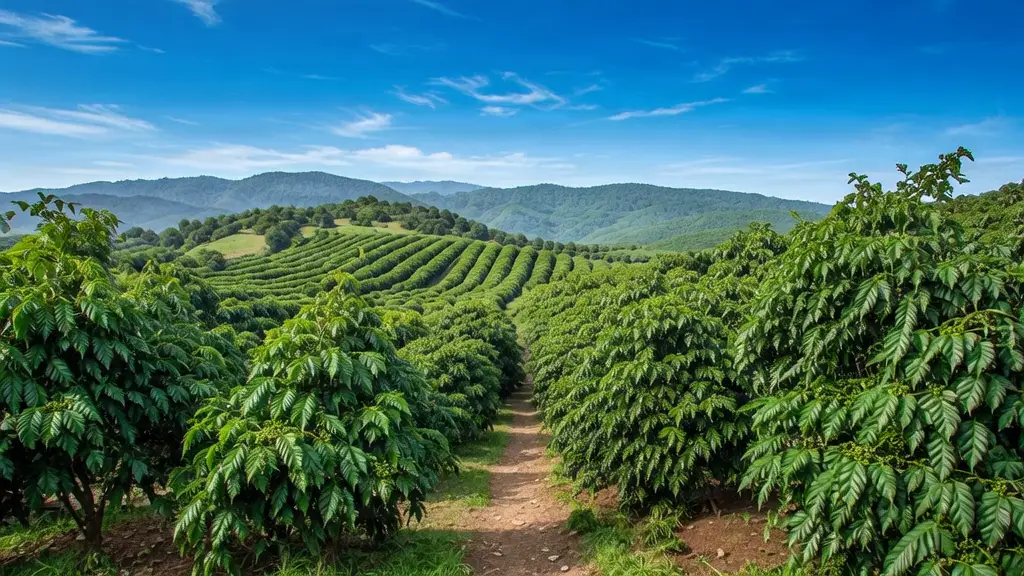
Industrial excellence in specialty agribusiness cannot rely on chance. At Ntamba Processors, our post-harvest protocols operate in rigorous alignment with technical standards developed alongside the Uganda Industrial Research Institute (UIRI) and national bio-processing benchmarks—guaranteeing laboratory-grade purity from green bean sorting to airtight export packaging.
Bridging Smallholder Agriculture and Industrial Science
Across Sub-Saharan Africa, significant economic value is lost post-harvest due to sub-optimal drying, erratic storage conditions, and microbial contamination. While raw commodity coffee is often rushed through unmonitored farmgate channels, Ntamba Processors approaches every harvest lot through the lens of industrial food technology.
Operating from our primary agroecological estate in Kyantamba, Mbarara District, and leveraging advanced industrial incubation infrastructure at the Namukeekera bio-processing center, our production lines bridge the gap between rural smallholder farming and export-grade industrial manufacturing.
Precision Moisture Control: The Sub-12% Standard
One of the most critical quality determinants in green coffee export is internal moisture content. International standards dictate that green coffee moisture must remain strictly between 10.5% and 12.0%:
- Moisture > 12.5%: Creates elevated risk of mold growth, enzymatic degradation, and the development of Ochratoxin A (OTA) mycotoxins during maritime container transit.
- Moisture < 9.5%: Leads to cellular embrittlement, bean shattering during mechanical hulling, and rapid loss of organic flavor precursors during roasting.
At our Kyantamba processing hub, all drying lots on raised African beds are monitored using calibrated digital dielectric moisture meters and hygrometric data loggers. Once parchment reaches exactly 11.2% moisture, it enters moisture-sealed conditioning resting bins for a minimum 30-day “sweating” period, stabilizing water activity (aW) below 0.60 before mechanical de-hulling.
Mechanical Density Separation & Screen Sizing
Following resting, our dry milling line utilizes modern vibrating gravity tables and rotary trommel screens to separate beans by both density and physical size. Our flagship Fine Robusta offerings are strictly graded to Screen 18 (7.14mm diameter mesh) and Screen 17, eliminating broken, insect-damaged, or underdeveloped floaters.
By standardizing bean size and structural density, our downstream commercial roasting machines achieve perfectly uniform thermal conductivity, ensuring that every drum batch develops sweet caramelized sugars without scorched tips.
Hygienic Standards for Apiary and Dried Fruit Lines
Our industrial processing standards extend equally to Ntamba Apiary and Ntamba FruitTreat lines:
- Cold-Settled Raw Honey: Honey is harvested using food-grade stainless steel extractors and allowed to cold-settle over 72 hours under hermetic sanitary conditions, preserving living diastase and invertase enzymes without thermal pasteurization damage.
- Sanitary Solar Dehydration: Fruits are washed in food-grade sanitizing baths, sliced uniformly with stainless steel mandolines, and dried in sealed indirect solar tunnels protected by particulate air filtration, ensuring zero dust or insect contamination.
Certifications and Verifiable Quality at Origin
By enforcing strict adherence to Uganda National Bureau of Standards (UNBS) guidelines and international HACCP sanitation frameworks, Ntamba Processors proves that high-value agro-industrial processing can thrive directly in Southwestern Uganda, generating sustainable prosperity for over 2,500 partner outgrowers.